
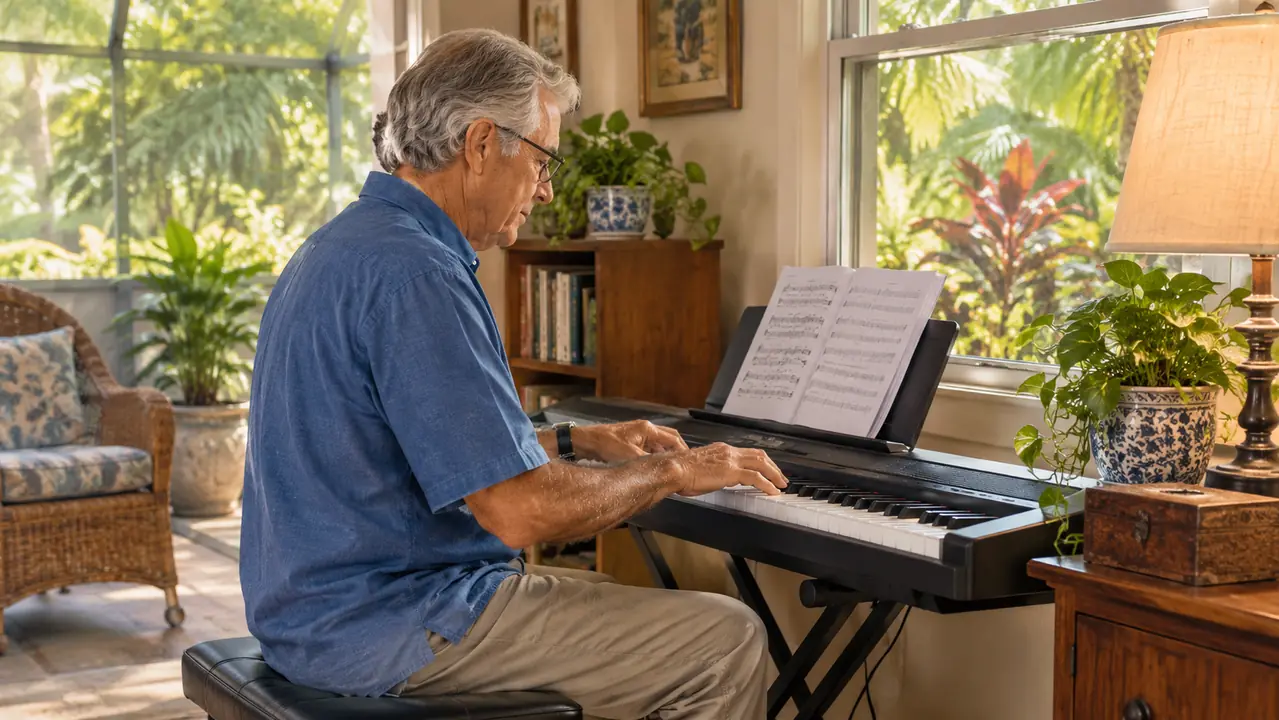
The upright in my music room belonged to my mother, and I would not trade it for anything. It also goes out of tune every time the trade winds shift. I live in Kaneohe, on the windward side of Oahu, and the air here is wet enough that I was paying a tuner twice a year just to keep middle C honest.
That is a small thing until you are the one playing for the Sunday service. Gospel leans on the low end, and when the bass notes start to sour, the whole congregation hears it. I would sit down at Saturday rehearsal, hit a chord, and make a face.
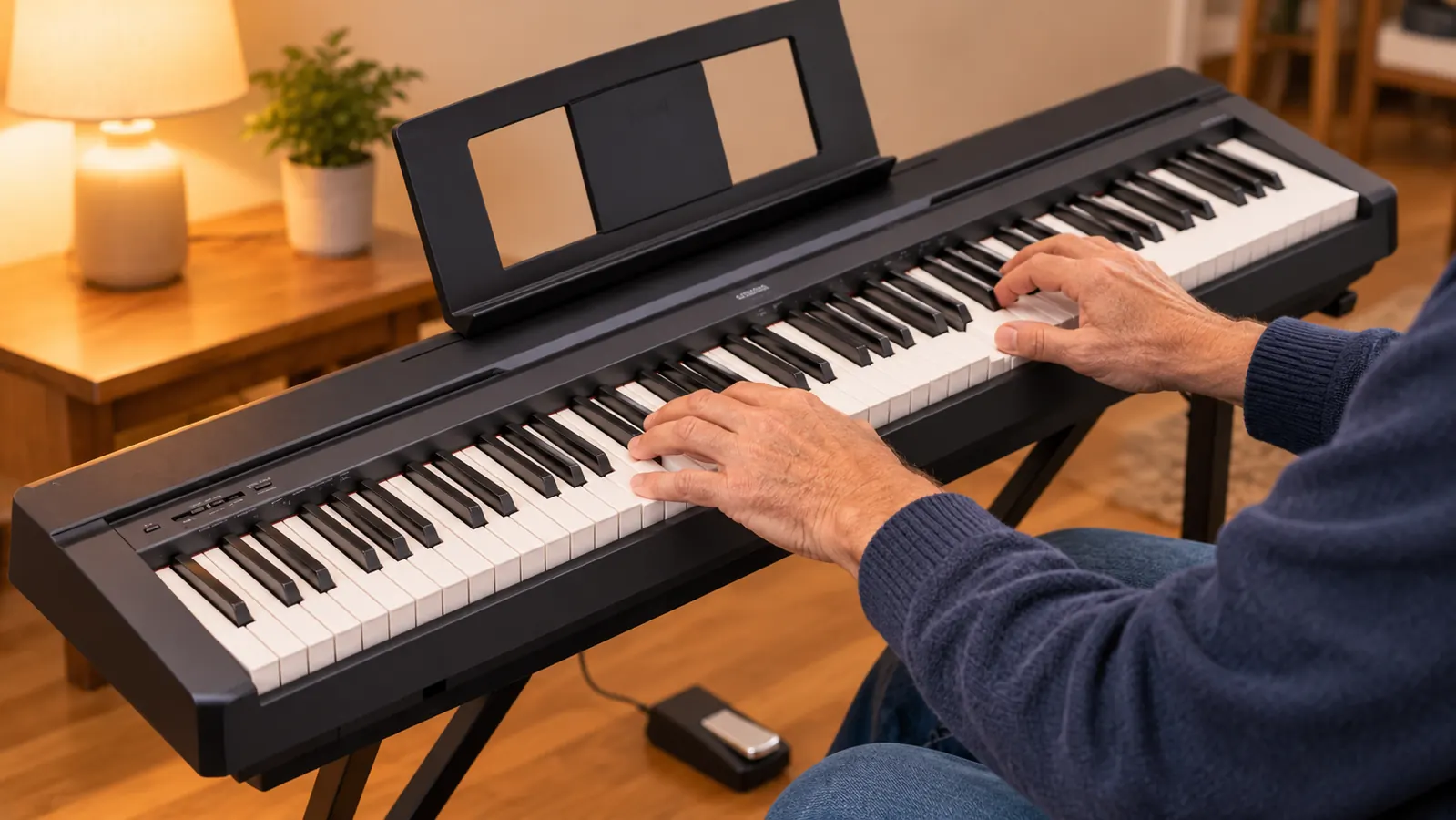
The other half of the problem was my granddaughter. Kaia is nine and learning. She wanted to practice before school, and the upright sits in the room off the lanai, the one room in the house where the humidity does what it wants. I did not want her hammering on my mother's piano at six in the morning, and I did not want her learning on an instrument drifting out of tune under her hands. Those two things are how the YAMAHA P71 ended up in my music room.
So I went looking for a second instrument. Not a replacement for the upright, just something that could stay switched on, that Kaia could play with headphones on, and that I could carry to the church hall when the Sunday school needs a piano.
I had played digital keyboards before, mostly the ones the school bought years ago, and I did not care for them. The keys felt like light switches. You pressed and something happened, but nothing in between. So I was not in a hurry to buy one.
A friend who plays at a church up in Kailua told me to try the YAMAHA P71. He said the weighted action was the part that mattered and the rest was details. So I found one, sat down with it, and gave it an hour.
Twenty-five pounds, 88 weighted keys, and a sustain pedal in the box. I carried it to the church hall myself and was playing ten minutes later.
The keys are the whole reason to buy this one
88 weighted, hammer-action keys, ten voices, a sustain pedal and a power supply in the box. Have a look at the full listing.
Amazon See the YAMAHA P71 on Amazon →The feel is the thing. The keys are weighted, hammer action, and the resistance builds as you press down, so a soft touch comes back soft and a firm one comes back with some weight behind it. That is the part I could never get from the older keyboards. When I run a gospel figure in my left hand, the piano answers at the volume I ask for instead of the volume the keyboard decides for me.
The sound is better than I expected from something this thin. The main voice is a Yamaha grand, and there are ten voices in all. Most of them I will never touch. But Dual Mode lets me lay a string sound under the piano, and on the slower songs at the Sunday service that is a fine thing, one voice sitting under another and filling out the room without anybody noticing why.
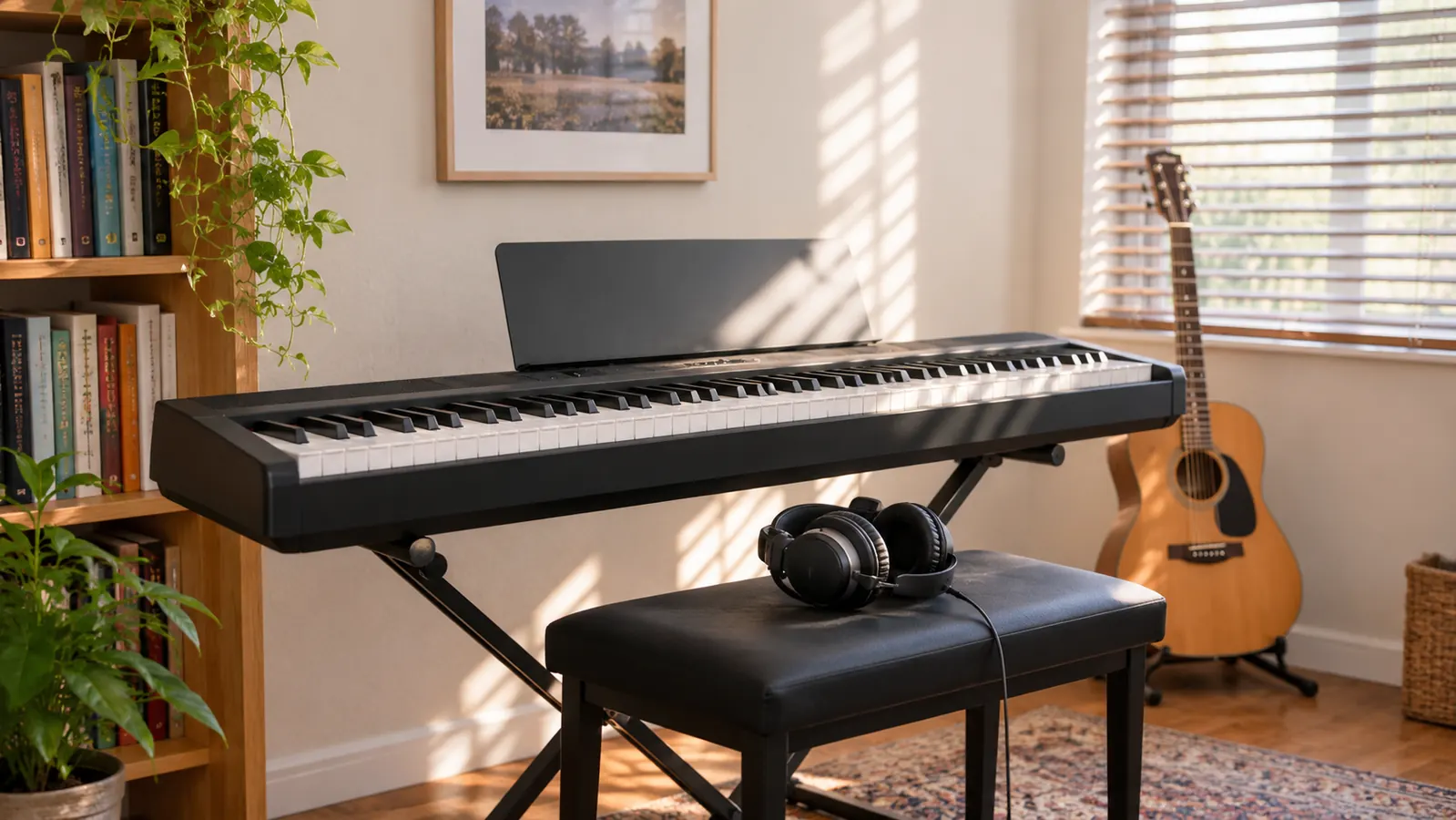
I use it more than I expected to. My music room is small, about the size of a decent dining room, and the built-in speakers carry it with nothing plugged in. The YAMAHA P71 is 52.25 inches across, 11.5 inches deep and 6 inches tall, so it fits along the wall where a bookcase used to sit. It weighs 25 pounds. I carry it to the church hall and back without asking anybody for help.
Kaia uses the headphone jack, the small 3.5mm one, and practices at seven in the morning while Leilani is still asleep down the hall. Duo Mode splits the keyboard into two halves so the two of us can sit at the same bench, her on one side and me on the other. I did not think I would use that. I use it every week.
What I do not love. The sustain pedal in the box is a small square thing that slides around on a wood floor, which is fine for Kaia and not fine for me. The front panel is deliberately plain, one button doing most of the work, and that is good for practice and less good when you want to change voices in the middle of a service. And it is a slab, so it needs a stand and a bench, and neither comes in the box.
What I'd Tell You If We Were Sitting at My Kitchen Table
Here is what I would say if you were across from me with a cup of coffee. Buy it for the keys, not the sounds. The voices are good, and you will use two of them and leave the rest alone. The weighted action is the part that trains your hands, and it is the part that will still be right in ten years. I played on light, springy keys for years and did not know how much I was missing until my fingers had something to push against.
Second, do not expect furniture. It is a slab on a stand and it looks like what it is, which does not bother me at all. Third, keep the old acoustic if you have one. I still play my mother's upright on Sunday and I still have it tuned. The YAMAHA P71 did not replace it. It took over the six in the morning practices, the Wednesday nights and the trips to the church hall, which is most of the playing I actually do now. And if a nine-year-old is going to use it, get a stand that does not wobble, because she will lean on it.
It took over most of my playing, and I am glad it did
The upright still gets Sunday morning. The YAMAHA P71 gets everything else. If that sounds like your week, take a look at it.
Amazon Check the YAMAHA P71 on Amazon →