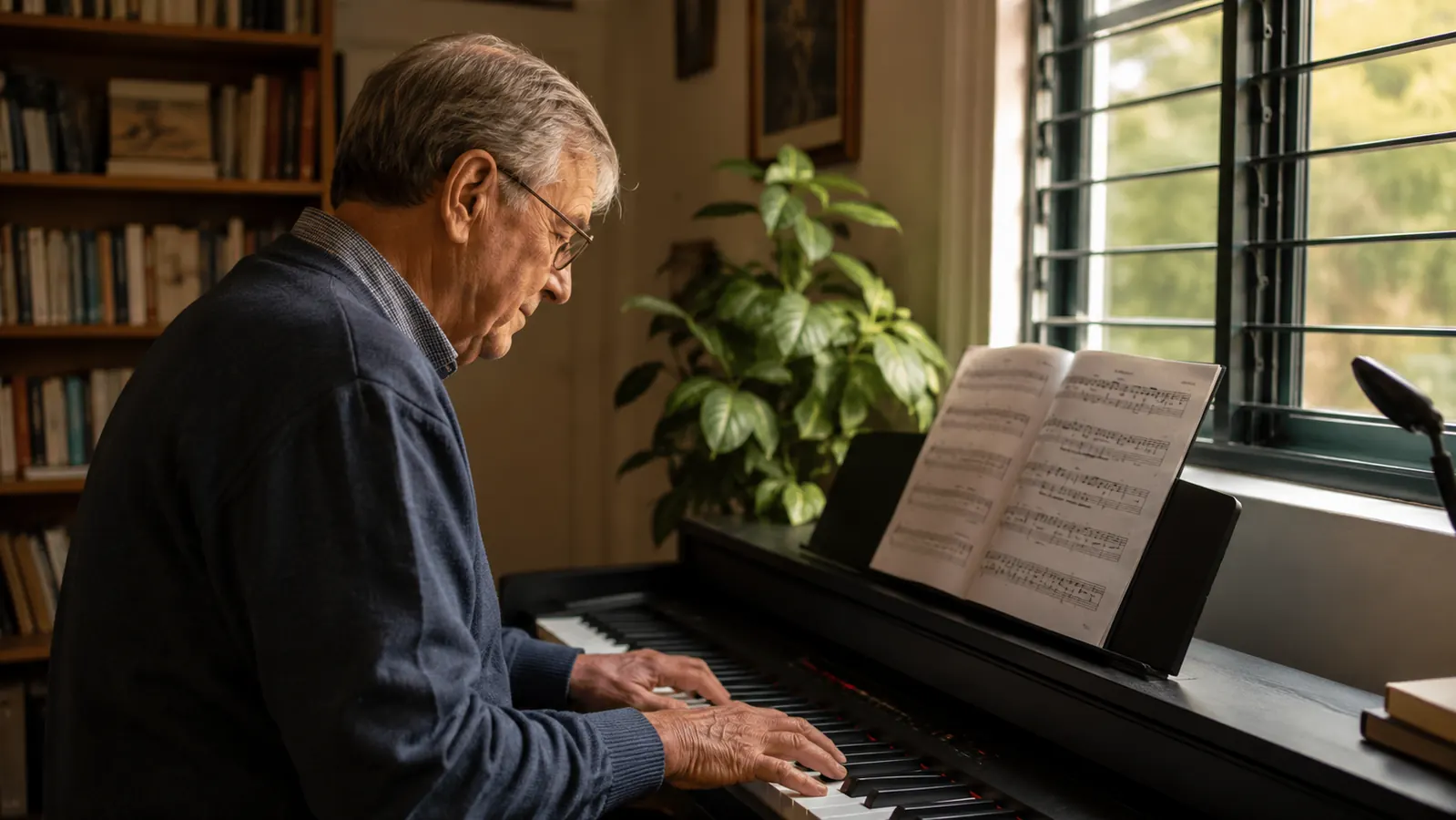
If you took lessons as a child and then quit for twenty or thirty years, coming back is not really a reading problem. The notes come back faster than you expect. The problem is in your hands. They remember an instrument that pushed back against them, and the keyboard in the closet does not. That is the reason I point returning players at a full 88-key weighted digital piano before anything else, and the one I keep recommending to adult students here in Kaneohe is the YAMAHA P71.
Let me be clear about what I am not saying. Weighted keys do not make you a better musician. They make practice transfer. When you sit down at your mother's upright, or at the church piano on Sunday morning, your fingers should already know how much work it takes to bring a note up. Here are ten specific reasons that matters, in the order I usually bring them up with a returning player.
The keyboard most of my returning students end up buying
Weighted action, 88 keys, a sustain pedal in the box, and it fits in a room you already have. That is the short version.
Amazon Check Today's Price on Amazon →The keys push back, so your touch comes back
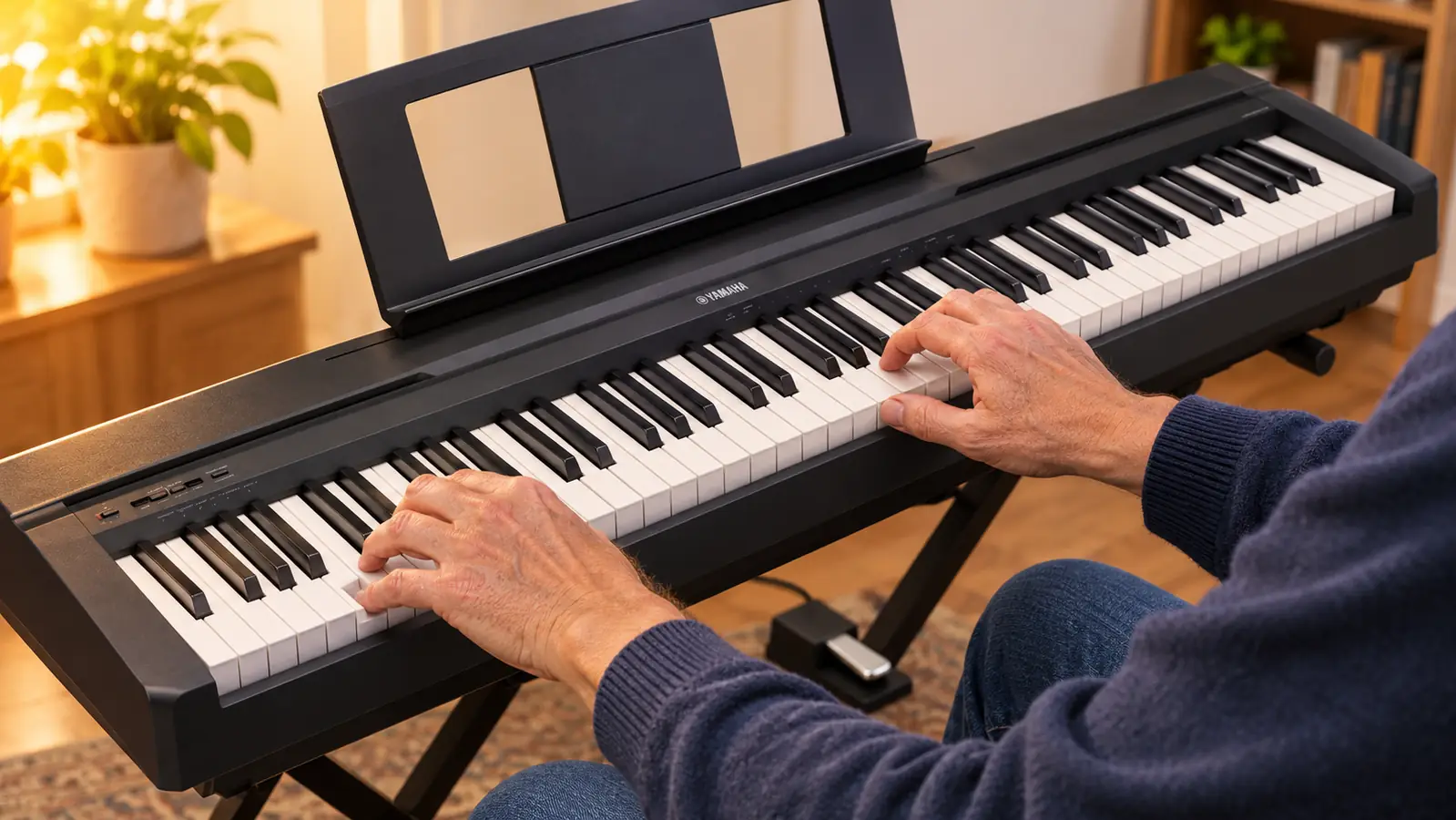
The P71 has 88 weighted keys with a hammer action, and they are touch-sensitive, which means a light press gives you a soft note and a firm press gives you a loud one. That sounds like a small thing until you have spent a month on a keyboard where every note comes out at the same volume. Your ear stops doing any work. On a weighted action you are back to shaping a phrase with your hands, and that is the skill that walks with you to any acoustic piano in the building.
You can practice at ten at night without waking the house
It has built-in speakers, so it plays on its own with nothing else plugged in. It also has a 3.5mm headphone jack. I keep a pair of plain over-ear headphones on the music stand, and I can put in a full hour after Leilani has gone to bed. For a returning player with a day job, that is the difference between practicing four days a week and practicing one. The instrument that gets played is the one that never inconveniences anybody.
Eighty-eight keys means you never hit a wall
Most budget keyboards give you 61 keys, and for your first month you will not miss the rest. Then you pull out a piece that walks down into the low octaves, or a hymn where the bass line needs room to breathe, and you are transposing on the fly or leaving notes out. The P71 is a full 88 keys. Buy the whole range once and stop thinking about it. Returning players quit over small frictions, and missing keys is one of them.
It fits in a room you already have
The thing measures 52.25 inches wide, 11.5 inches deep and 6 inches tall, and it weighs 25 pounds. In my spare room off the lanai it takes up less floor space than the bookcase, and I can shift it by myself when the room needs to be something else for a week. A piano you can move is a piano that gets played. In a small island house, that is not a small consideration, and it is why I stopped suggesting people wait until they have a dedicated music room.
Ten voices cover Sunday service and the living room
There are 10 voices on it, including the sound of the YAMAHA grand piano. I use the piano voice for practice at home and for most of the gospel numbers at church. On a quiet evening I will switch to something softer and play until I get sleepy. Ten is not a hundred, and I have never once wished for more. What matters at this stage is that the main piano sound stays even from the bottom of the keyboard to the top, and it does.
Eighty-eight weighted keys and a headphone jack decide whether a returning player actually practices. Everything else on the panel is preference.
Dual Mode puts strings under the piano
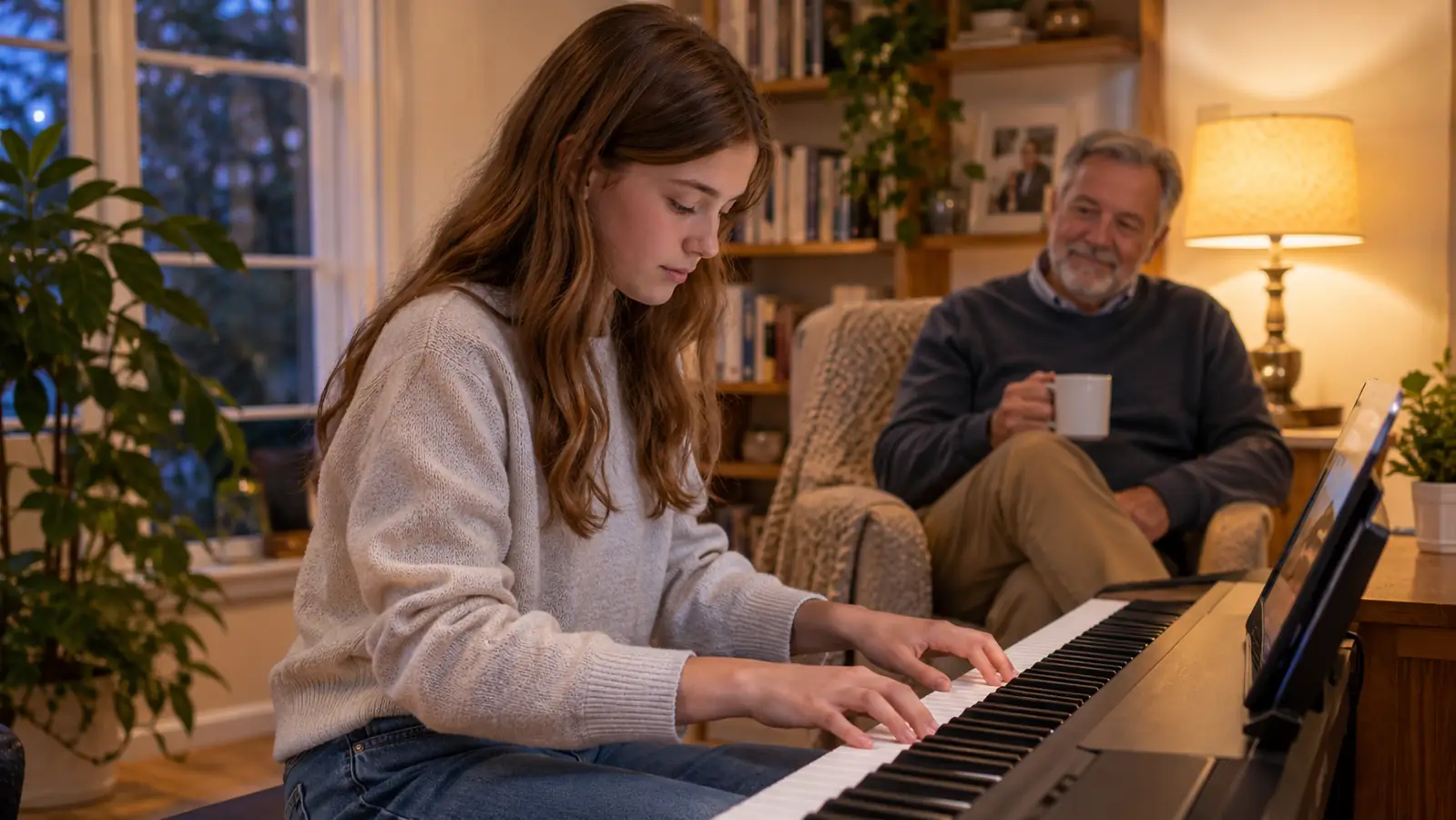
Dual Mode blends two voices at once, so you can lay strings under the piano and get a fuller sound for a slow song or an offertory. I used it more than I expected once I started playing service again. It is a small feature that makes one instrument feel less alone in a room with a high ceiling and a lot of people in it, and it takes about four seconds to set up between numbers.
One button, so your hour goes to playing
The control panel is a single button and a few choices. That is deliberate. There is no menu to learn and no display to page through while your practice window drains away. I have watched adult students lose a whole evening to figuring out a piece of gear instead of playing it. This one you turn on, and you play. There is also a Duo Mode setting, which is handy when my granddaughter Kaia wants to sit next to me at the same range, and it does not complicate the rest of it.
The sustain pedal is in the box
It ships with a sustain pedal and a power supply, so there is no second order and no mismatch to sort out later. Half the keyboards I have helped people buy over the years needed a pedal purchased separately, which then arrived a week late and did not feel right. Pedaling is not decoration. It is the thing that makes a phrase sound like a phrase instead of a string of notes. Having it from the first day matters more than most people expect.
It talks to a laptop when you want to record or take a lesson
There is USB and an auxiliary connection, and it lists support for Logic Pro. I am not a recording person, but several of my former students are. What I can tell you plainly is that the USB connection lets the keyboard drive a lesson program or a piano app on a laptop, which is useful for a returner working through a method book without a teacher in the room. Headphones plus a laptop makes a quiet practice corner out of a small room.
No tuner, no humidity excuse, no yearly bill
My mother's upright is in the front room and it needs tuning roughly once a year, sometimes twice when the air gets heavy and the soundboard starts to drift. A digital piano does not. It runs on corded electric power, you switch it on, and it is in tune. For a returner who is not certain yet whether this is going to stick, that removes one whole category of excuse. You cannot put off practice because the piano is out of tune if the piano is never out of tune.
What I'd Skip
Two things I would not spend money on. I would not buy a 61-key keyboard to save space and then plan to upgrade later, because you will run out of range inside a year and you will have paid twice. And I would not pay extra for a furniture-style cabinet with a lid at this stage. None of that changes what comes out of the speakers or how the keys feel under your hands.
Put the money into the weighted action and the 88 keys first, then spend what is left on a bench at the right height. Most of the returning players I have taught are sitting too low, and after forty minutes their shoulders tell them to stop before their hands are ready to. A bench is boring to buy and it is the cheapest upgrade to your playing you will ever make. The YAMAHA P71 sits on a stand or a table either way, so the bench is where I would put the next dollar.
If you have been waiting for a reason to start again, this is a sensible one
The YAMAHA P71 does the two things a returner actually needs. It feels like a piano under the fingers, and it stays out of everybody else's way. The rest is preference.
Amazon Check Today's Price on Amazon →