
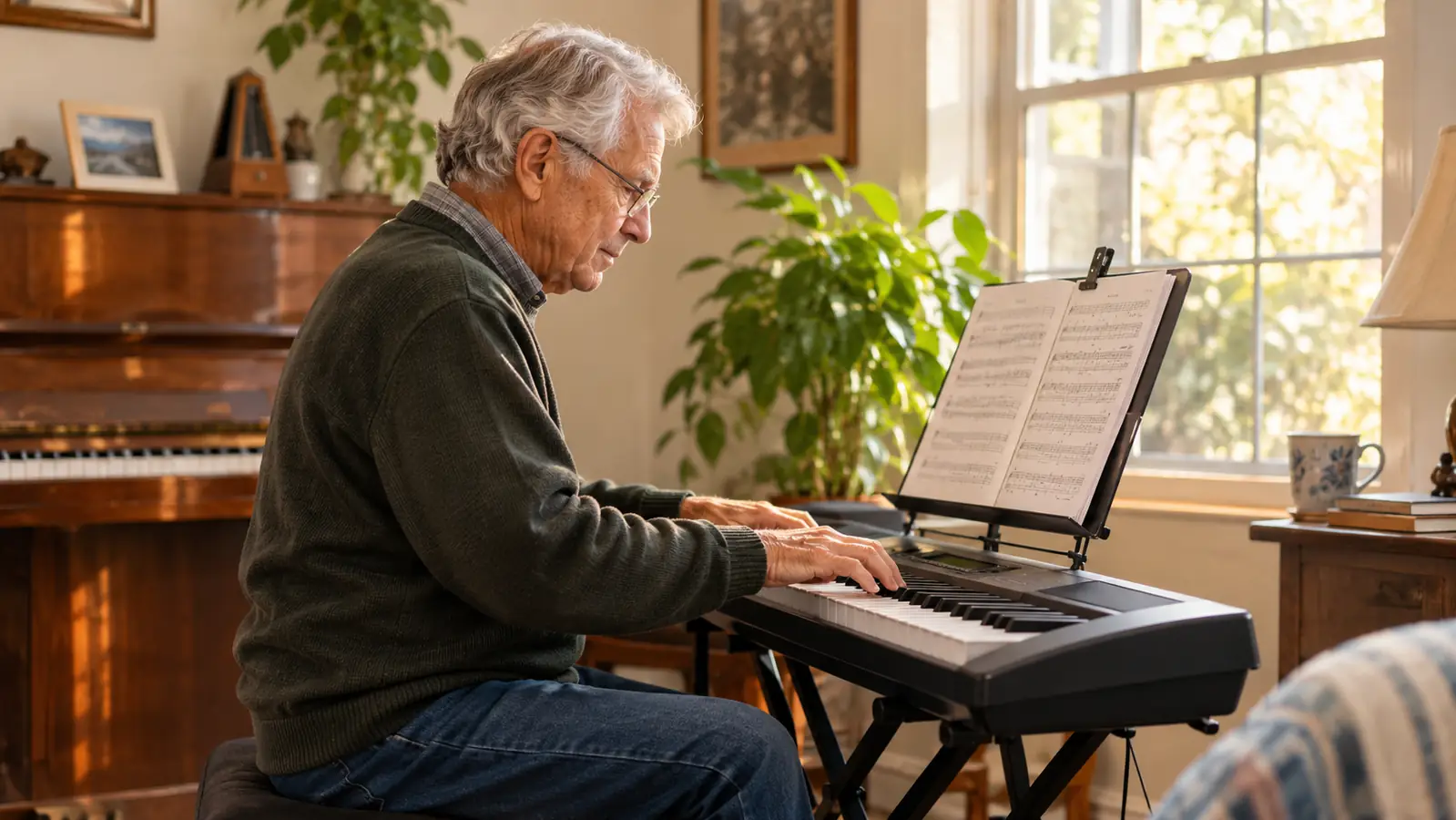
The box sat by the front door for two days before I opened it. My wife Leilani had ordered the RockJam RJ361 for our granddaughter Kaia, who is nine and had been asking about piano lessons since Christmas. I taught middle-school music for thirty years before I retired. I have opinions about beginner instruments, and most of them are not generous.
Here is what thirty years in a classroom teaches you about beginners. The instrument either gets out of the way or it does not. A child sits down, presses a key, and hears something back. If the sound comes out thin or the keys fight her, the lesson is finished before it starts. I have watched a lot of nine-year-olds quit inside the first month, and it was rarely the child's fault.
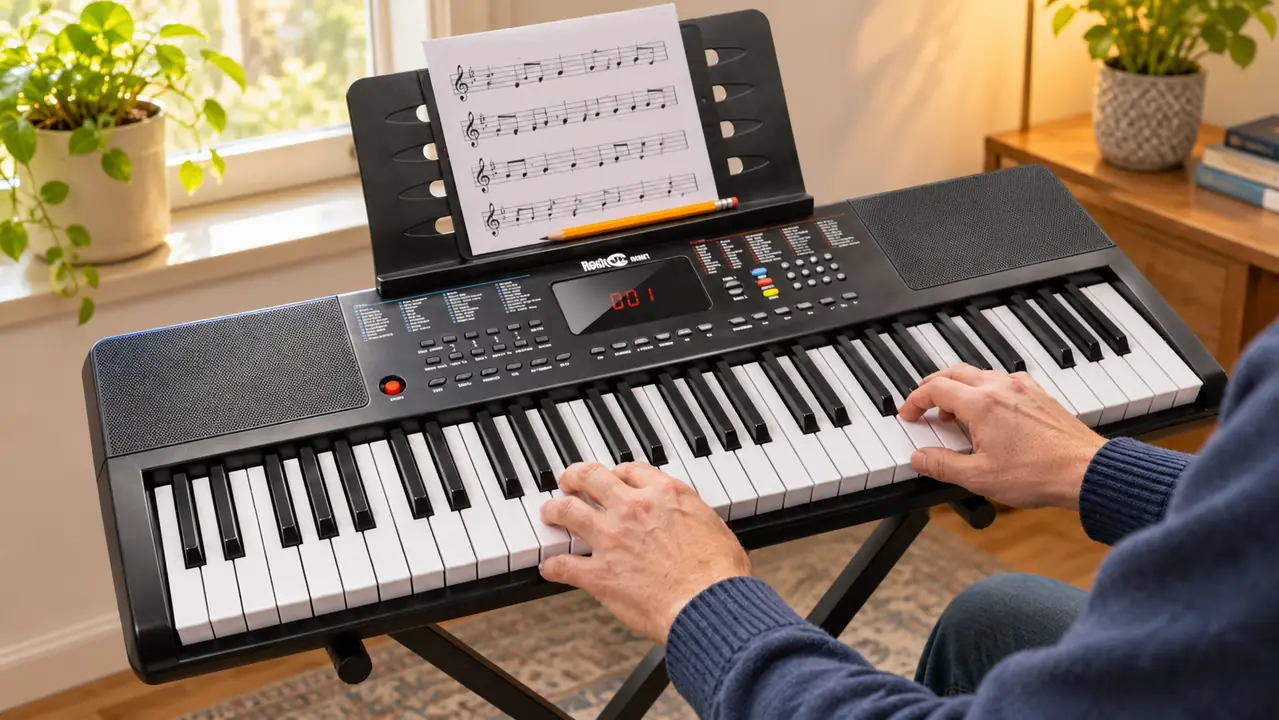
So I opened the box the way a teacher opens a box, not the way a shopper does. Inside were the keyboard, the power supply, a sheet music stand that clips on, note stickers, and a code for Simply Piano lessons. Sixty-one keys, which is five octaves, enough for every method book I ever taught out of. It weighs 2.84 kg, so Kaia can carry it from the living room out to the lanai without asking me for help.
The first time she sat down she pressed middle C and looked up at me. That is the moment I watch for. The note came back clean and the key came back up under her finger. She pressed it again, then a third time, and then she started hunting around for a tune. Nobody had to tell her to keep going.
Six weeks in, she plays the first verse of a hymn, melody in her right hand and one bass note on the beat. I have had students take a year to get that far on an instrument they were half afraid of.
The keyboard that got played every single day of its first six weeks
Sixty-one keys, 200 sounds, note stickers, a music stand and Simply Piano lessons in the box. Nothing else to buy before a beginner can sit down and start.
Amazon Check Today's Price on Amazon →The first week was stickers and single notes. The note stickers that come in the box go right onto the keys, and as a teacher I have mixed feelings about them. They speed up the first month and they slow down the third. But for a nine-year-old who wants to play something recognizable on day one, they earn their place. Kaia had a five-note scale mapped out before dinner.
Then she found the sounds. Two hundred of them, which is far more than any beginner needs and exactly what a nine-year-old wants. She spent a whole afternoon cycling through them while I pretended to read the paper. I finally made a rule: practice first, exploring after. The record and playback feature turned out to matter more than any of it. She records four bars, plays it back, and hears for herself that her timing drifts on the third one. You cannot lecture that into a child. She has to hear it.
The 200 rhythms are the part I expected to dislike. A drum track under a beginner is usually a crutch. But Kaia keeps time better with a beat behind her than she does counting out loud, so I use them the way I used a metronome in my classroom, for two minutes at a time and then off. The sustain and vibrato buttons she discovered on her own and now uses far too much, which is a phase every student goes through.
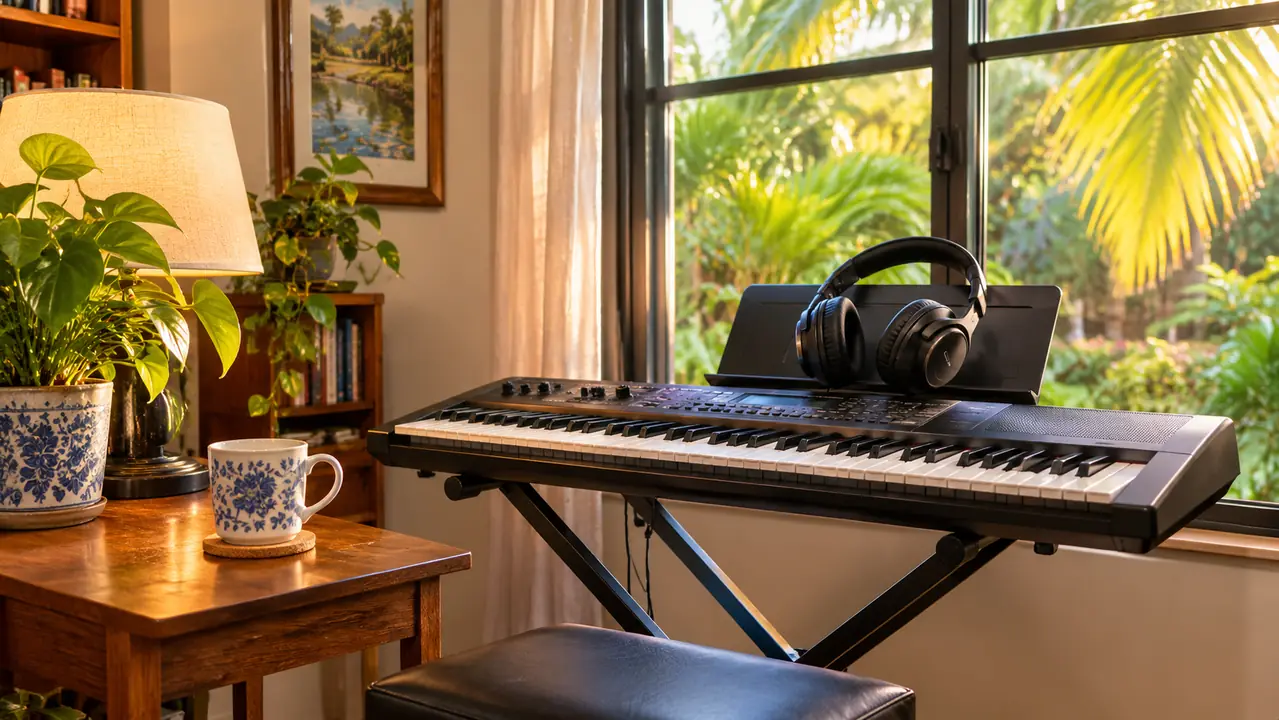
The room matters more than people expect. My music room is a small spare space off the lanai, and the humid air out here is hard on anything with a soundboard in it. My mother's upright lives in that room and I have it tuned twice a year whether it sounds like it needs it or not. The RockJam sits on its stand near the window and the damp does not touch it. When the trade winds die in August and everything else in that room goes soft and sour, the keyboard sounds the same as it did in May.
It also travels. At a family gathering in June, Kaia carried it out to the lanai herself and played for her cousins, and that is the whole point of an instrument that weighs 2.84 kg. The upright has never once been carried anywhere.
Two things I did not love. The built-in speaker is small, and it gets thin when she pushes the volume, so most evenings she plays with headphones in the jack and I hear the keys tapping instead of the notes. And the action is light, which suits a beginner's hands but will not build the strength she will need if she moves over to the upright later. That is a real gap, and I would rather name it than pretend otherwise.
What I'd Tell You If We Were Sitting at My Kitchen Table
If you are the person in the family who gets asked whether a thing is any good, here is my answer. For the first year, yes. The RockJam RJ361 does the one job a beginner instrument has to do, which is to be in the room and easy to sit down at. It is light, the power supply and music stand come in the box so there is nothing else to go buy, and the Simply Piano lessons give a kid a path forward on the evenings when the adults are busy.
What it will not do is replace a piano. If your child is three years in and serious, save for weighted keys and a better speaker and spend what that costs. If your child is nine and curious and you are not ready to find out whether this sticks, this is the right amount of instrument. Do not buy the bigger thing first. Buy the one that gets played. The best instrument in a house is the one a child reaches for without being asked, and in this house that has been this keyboard, every day, since the box came in.
Start with the instrument that actually gets played
A compact 61-key keyboard with 200 sounds, record and playback, a music stand and Simply Piano lessons included. Light enough for a nine-year-old to carry to the next room.
Amazon Check Today's Price on Amazon →