
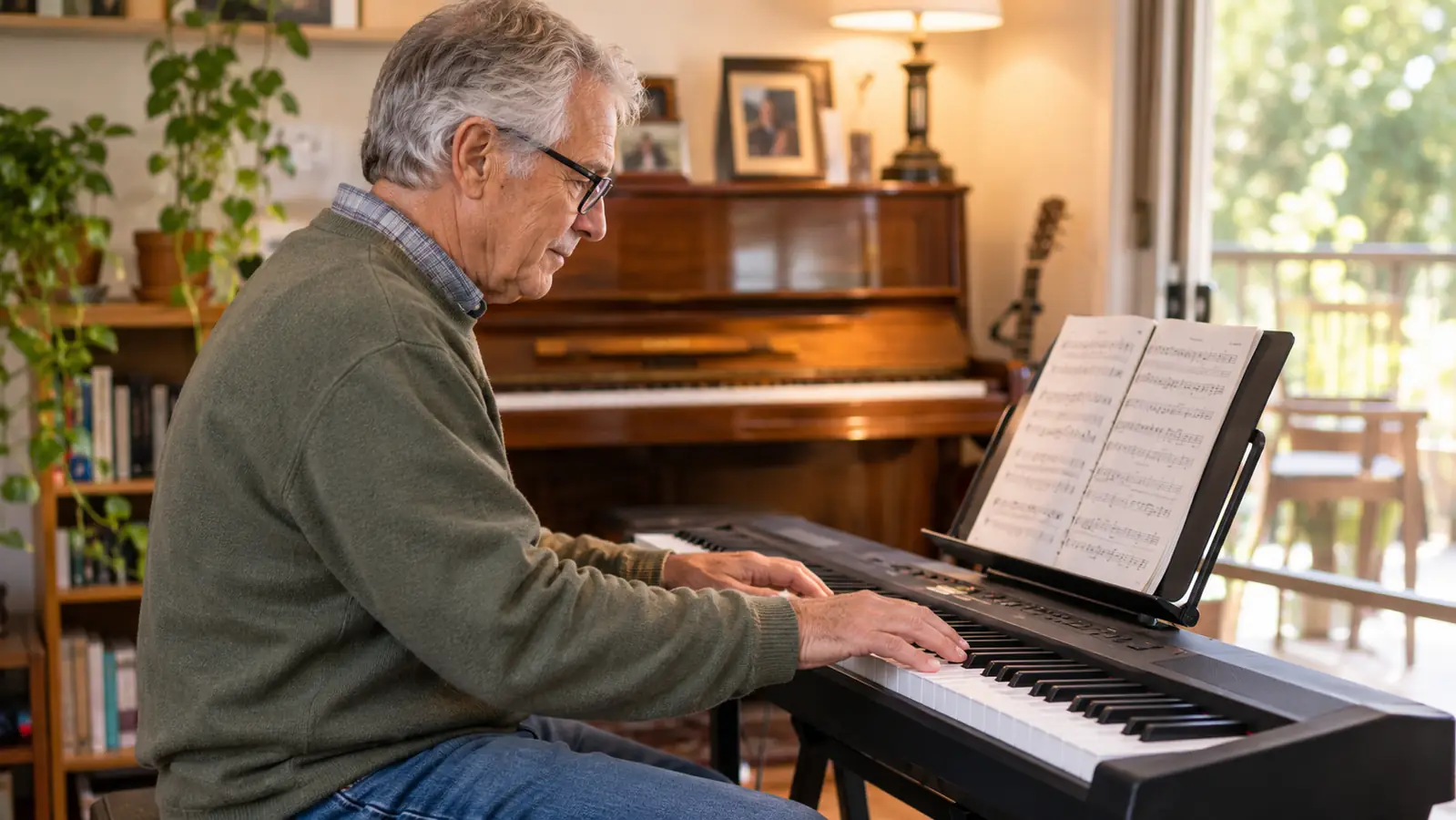
The pedal that came with my small digital keyboard had a habit of sliding under my heel at the worst possible moment. I would be halfway through a gospel phrase at home, the kind where the harmony hangs on the sustain, and the note would cut off like a door closing. I am 63, retired from teaching middle-school music, and I play piano for the Sunday service at my church in Kaneohe. I am not a gear collector. I want the instrument to feel right under my hands and my feet, and I want it to work when I sit down. That is why I tried the M-AUDIO SP-2.
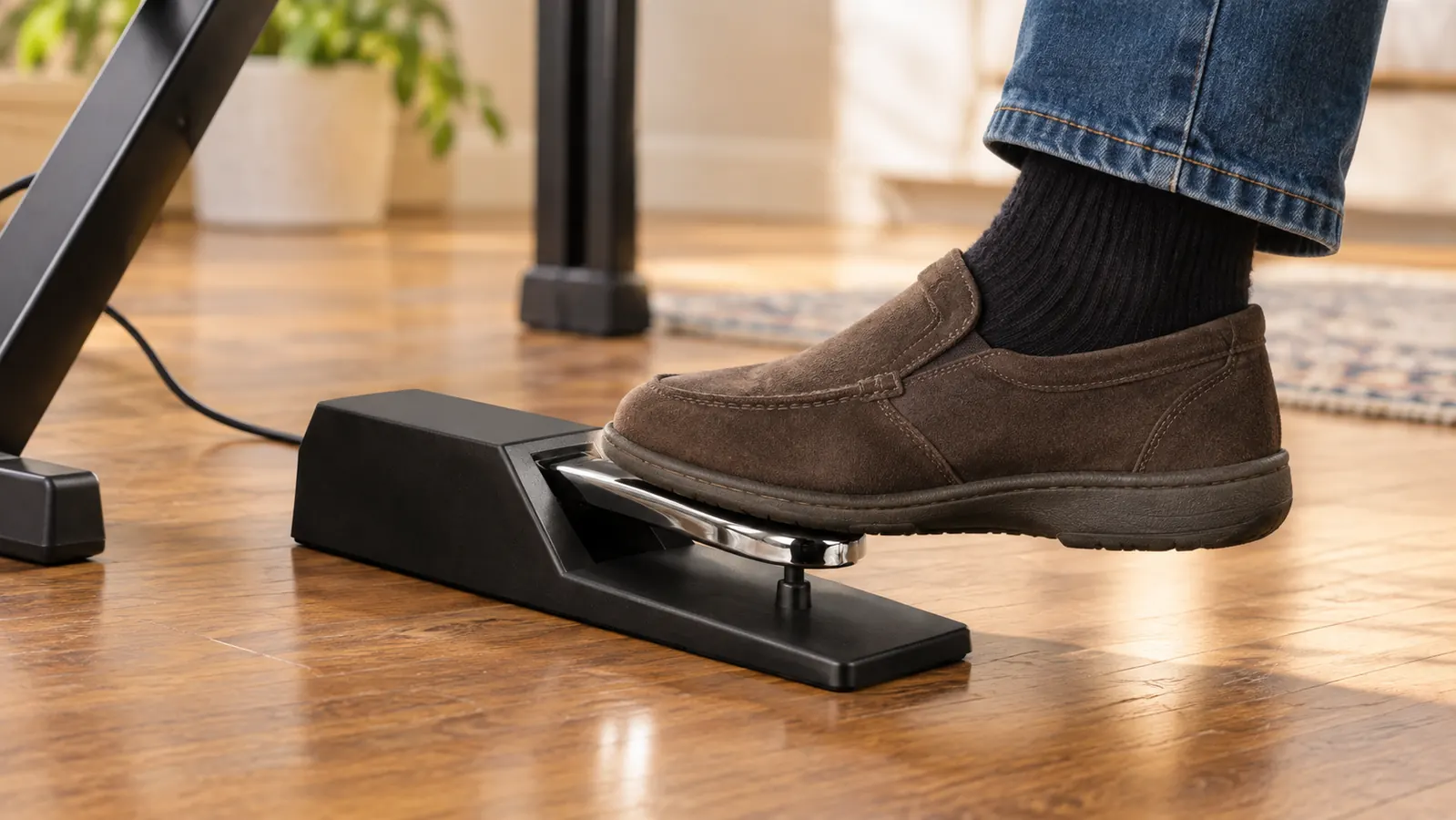
The SP-2 is a universal sustain pedal. It has a 1/4-inch jack and a 6-foot cable, a polarity switch, and a compact footprint. Mine sits on the wood floor beside the keyboard in the spare room off the lanai. The room is small, humid from the island air, and shared with sheet music, a music stand, and whatever Kaia, my nine-year-old granddaughter, has left on the bench. The pedal does not ask for much space. It measures 10.5 by 3 by 2.5 inches and weighs 14.1 ounces. That matters in a room where every inch has a job.
The first week, I did what I always do with a new piece of gear: I played things I know too well. Hymns. A few gospel progressions. The opening of a Chopin prelude I have not performed since my teaching days. I listened for the sustain to bloom and fade in a natural way. The pedal action felt realistic to me, close to the resistance of the upright in the front room. My mother's old upright has its own personality and needs tuning more often than I would like. The digital keyboard is for late practice and for Kaia's lessons. The pedal is the bridge between the two.
Before the SP-2, I had a thin pedal that came with the keyboard. It worked, in the way a paper cup works when you need a glass. It moved around. I had to chase it with my heel. The cable was short enough that I had to sit at an odd angle. The SP-2 has enough cable to place the pedal where my foot naturally falls, and the rubber body stays put on the wood floor. I am not saying it is glued down. It is not. But I stopped thinking about it, which is the best thing I can say about a sustain pedal.
Teaching piano for thirty years taught me that students hear the sustain before they understand it. A note without pedal is a stone. A note with pedal is a bell. The pedal is not decoration. It is part of the instrument. When I retired, I thought I would play less. I play more. The church service, the family gatherings, the evenings when Leilani is reading and I am at the keyboard. The SP-2 is the piece of equipment that made those evenings sound like music instead of practice.
I stopped thinking about the pedal, which is the best thing I can say about a sustain pedal.
If your sustain cuts off in the middle of a phrase, start here
The M-AUDIO SP-2 is the pedal I keep under the keyboard in my music room. It has the 1/4-inch jack, the 6-foot cable, and the polarity switch that made setup simple.
Amazon Check Today's Price on Amazon →The polarity switch is a small thing that saved me a headache. My keyboard is not fancy, and I did not want to read a manual to find out why the pedal was working backward. I plugged in the SP-2, flipped the switch, and the sustain behaved the way it should. If you have ever pressed a pedal and gotten the opposite of what you wanted, you know that switch is not a luxury. It is the difference between playing and troubleshooting.

At church, I play the piano, not the keyboard, most Sundays. But I have carried the SP-2 with me when the service uses an electronic keyboard, and it fits in a tote bag beside my music folder. The compact size is the reason. It does not feel like a toy. The mechanism is heavy duty, and the pedal has a firm, natural action. I have used it for a few months now, most days, and it has not developed a squeak or a dead spot. That is a low bar, maybe. But I have owned pedals that failed to clear it.
The M-AUDIO SP-2 does one job. It sustains. If you need a pedal with more controls, this is not that pedal. If you need a reliable sustain for practice, church, and teaching a nine-year-old how to lift her foot at the end of a phrase, it is enough. Kaia noticed the difference right away. She said the notes ring now. That is a nine-year-old's review, and I will take it.
I also like that it does not call attention to itself. The music room is not a studio. It is a spare room with a window that looks toward the lanai, and when the trade winds come through, the humidity is a fact of life. I keep the keyboard covered when I am not using it. The pedal has a rubber body that wipes clean and does not mind being under a bare foot or a sock. It is plain, and plain is what I want in a pedal.
What I'd Tell You If We Were Sitting at My Kitchen Table
If we were sitting at my kitchen table with a cup of coffee, I would tell you not to overthink a sustain pedal. You need it to feel natural under your foot, to stay where you put it, and to work with your keyboard without a fight. The M-AUDIO SP-2 does those three things. It has a 1/4-inch jack, a 6-foot cable, a polarity switch, and a compact body that fits in a small room. It is not the last pedal you will ever buy if you are a concert pianist with specific demands. It is the pedal I would hand a student, a church player, or a grandparent who wants the notes to ring. That is enough for me.
The pedal I would hand a student who keeps losing the sustain
Simple, stable, and easy to set up with the polarity switch. Check today's price on Amazon and see if it fits your keyboard.
Amazon Check Today's Price on Amazon →