
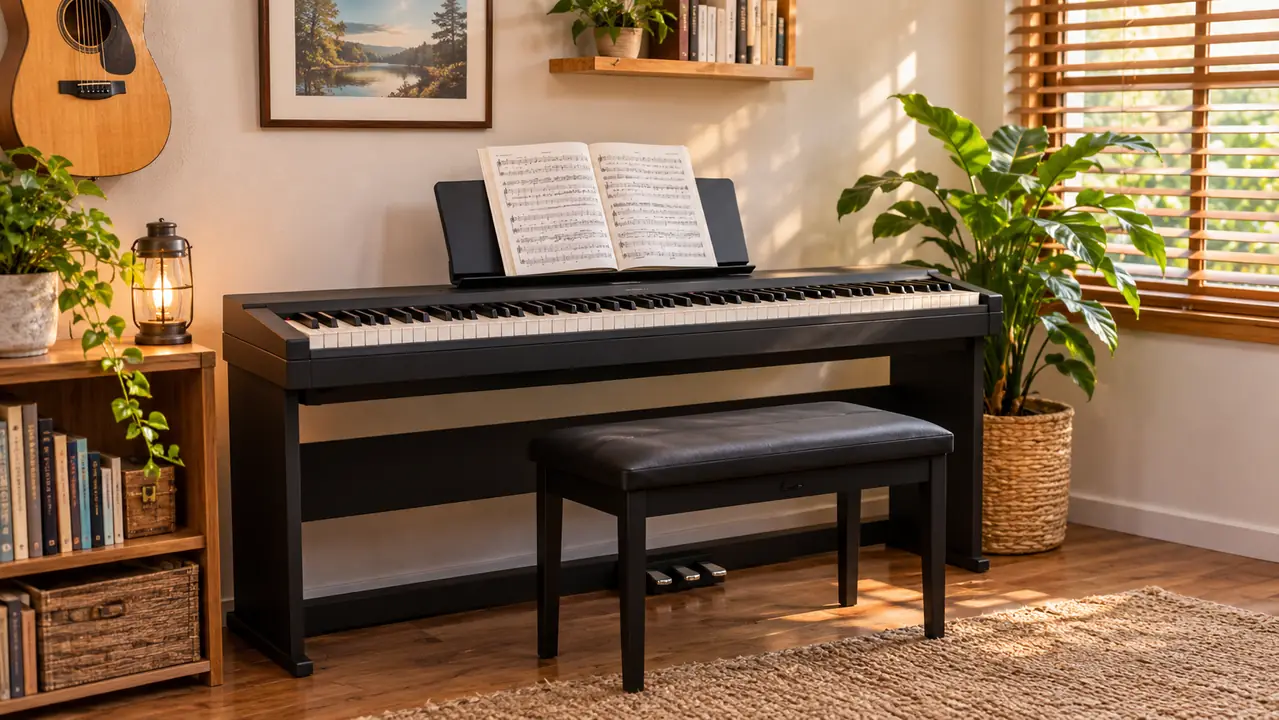
The upright piano in my music room belonged to my mother, and I have never once thought about getting rid of it. What I think about, most Saturdays, is the tuning. Kaneohe air is wet nearly all year, and a wooden instrument in a room just off the lanai soaks that up. That piano drifts out of tune faster than anything I had in a classroom in thirty years of teaching middle school. It is one of the reasons a Donner DDP-80 now sits under my window, and why the upright gets played on Sundays and holidays instead of every night.
Then my granddaughter Kaia turned nine and asked to start lessons. She is a patient child with a short attention span for anything that does not make a sound, so I said yes before she finished the sentence.
Two things pushed me toward a second instrument in the house. The first was volume. I play for the Sunday service at our church, mostly gospel, and I need to run through arrangements on a Thursday night. The upright does not have a quiet setting. My wife Leilani has a quiet setting, and it is called closing the bedroom door.
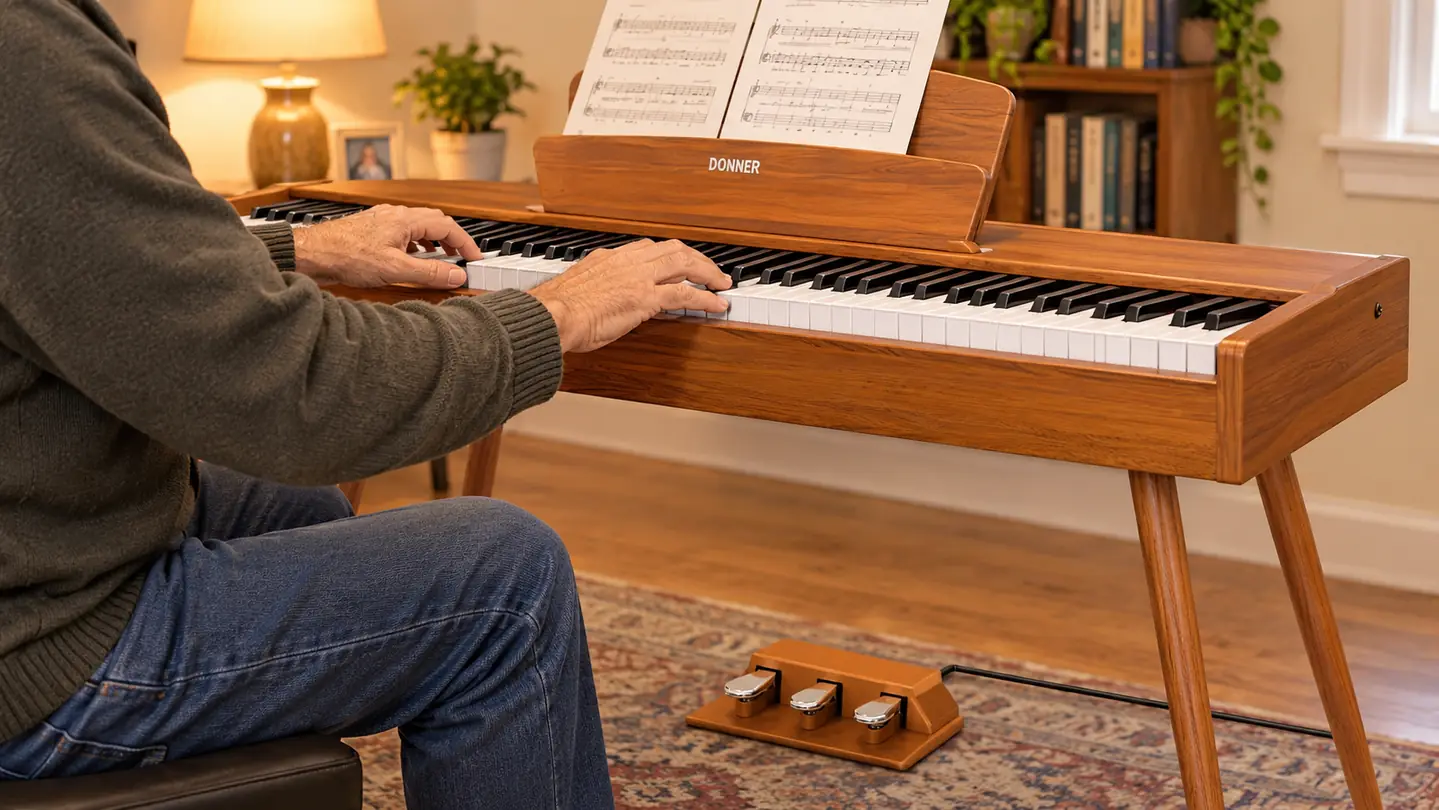
So I did what any retired teacher does when he has a question. I read. The name that kept surfacing in the piano forums I still poke around in was the Donner DDP-80, an 88 key digital piano with a weighted hammer action, a stand, a triple pedal and a sheet music stand all in the box.
The second reason was Kaia. She practices at her own house during the week. On weekends she wants to play here, and I wanted something she could sit down at without me hovering over her hands while they are on my mother's keys.
The Donner arrived in two boxes and took me a little over an hour to put together by myself. Most of that was me being careful. The footprint is what sold the room: 59 inches wide, 16.9 inches deep and 29.3 inches tall, at 23.8 kilograms. It slid under the window where a bookshelf used to stand. The bookshelf went to the hall and nobody has complained yet.
Kaia played for forty minutes that first afternoon without once asking to stop. On the upright, I get about twelve.
The piano that practices at eleven at night without waking the house
88 full-weighted keys, a triple pedal, a sheet music stand and the power adapter, all included. 4.4 stars across 1,191 reviews from players who mostly wanted the same thing you do.
Amazon Check Today's Price on Amazon →The first thing I noticed was the resistance. A weighted key that fights back a little is the difference between practicing and typing. Donner calls it a heavy hammer action, and it is heavier than the keyboards my students used to drag into class. When I run a scales exercise on it, my fourth and fifth fingers get the same work they get on the upright.
The second thing was the sound in a small room. Two 25 watt stereo speakers are more than this space needs. I keep the volume near a third and it still carries out the lanai door. There is 128 note polyphony, which matters more than people expect. Hold the sustain and play a gospel run with both hands and a cheap piano starts dropping notes out from under you. This one does not.
The triple pedal is the part I assumed would be an afterthought, and it is not. The sustain behaves the way I want it to, and the soft pedal gets used most evenings whether I planned to or not.
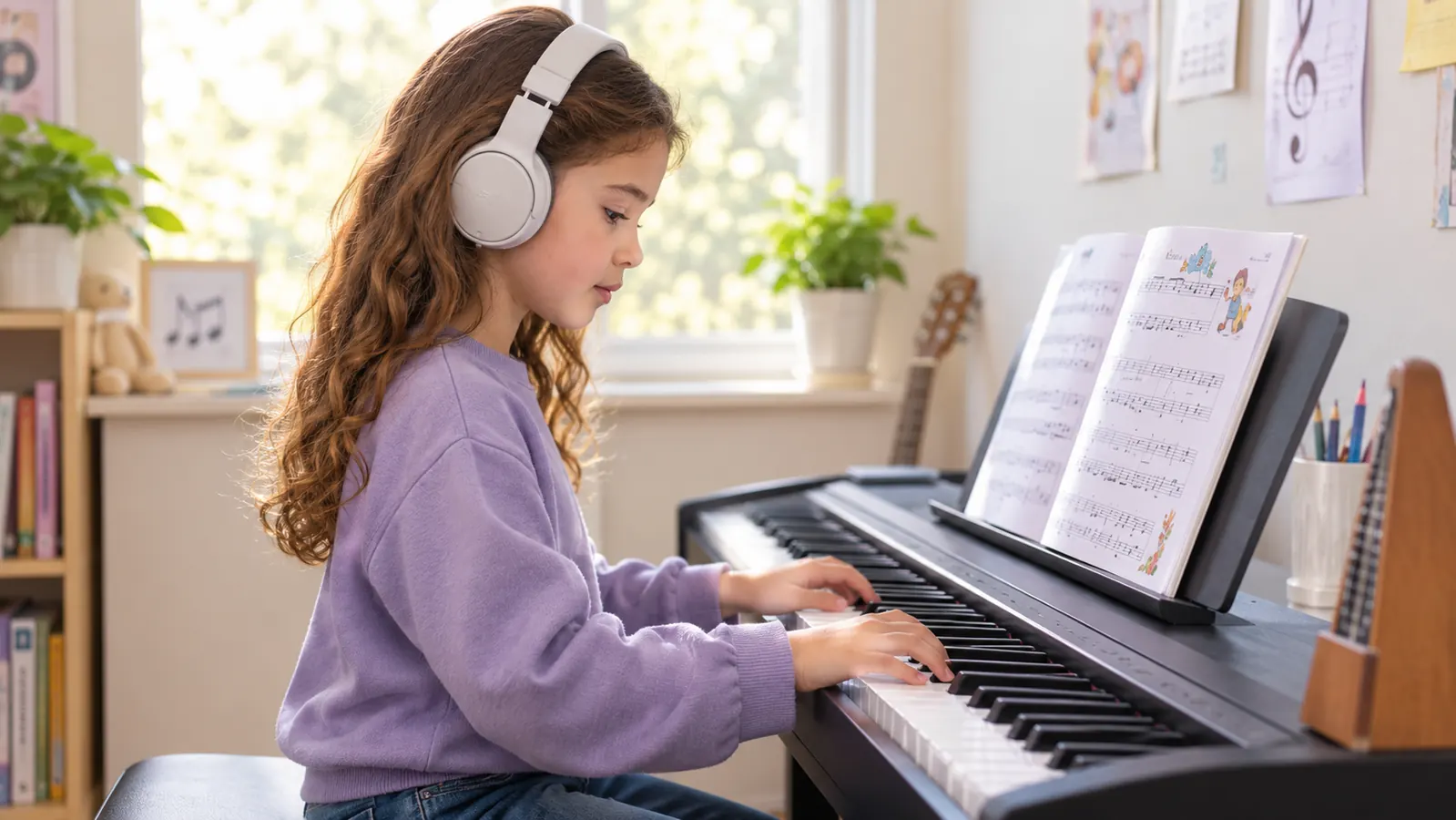
Then there is the 3.5 mm headphone jack. That is the whole reason this piano lives here. I have run through the Sunday set at eleven at night with the door open and Leilani slept through all of it.
Kaia has her own routine now. She plugs in headphones, opens her book on the stand, and works through her lesson while I read in the next room. When she wants to show me something she pulls the headphones out and the speakers take over. I also ran a USB cable from the piano to my laptop once, mostly to see if it would work. It did. I will probably never use it again, but a friend of mine who writes arrangements would live in it.
Where it gives ground, and I want to be straight with you: the cabinet is compact, and compact means the lowest octaves do not have the chest weight of a full upright cabinet. If you are chasing the feel of a concert grand in a hall, keep looking. In a spare room in Kaneohe, that is the right trade to make. One more thing that surprised me. The humid air here does not bother it at all. There is nothing to tune. My mother's piano still gets tuned twice a year, and it still deserves it.
What I'd Tell You If We Were Sitting at My Kitchen Table
I would tell you to buy the room before you buy the piano. Sit in the space where it will go and ask how loud you are allowed to be at the hour you actually practice. Most people quit an instrument because of the people they live with, not because of the instrument. If your answer is that you need to be quiet after nine, then a headphone jack is not a nice extra. It is the whole purchase, and the Donner has one that works.
I would also tell you not to expect it to replace a good acoustic. It replaced the need to play the good acoustic every single evening, which is a different job. For a beginner who needs weighted keys so her hands learn to push, and for a working pianist who needs to rehearse quietly after dark, it does both of those things without fuss. It is not furniture, and it is not trying to be. It is a piano you can leave in a room with a window open to the trades, and it will be in tune tomorrow.
Small room, late evenings, a beginner at the bench: this is the one I'd start with
88 weighted keys, triple pedal, stand and music stand included. Set it up in an hour and play it the same night, quietly or not.
Amazon See the Donner DDP-80 on Amazon →